









Dengue vs Malaria: Know the Difference Easily
Introduction
During the monsoon, cases of both Dengue and Malaria rise sharply. Yet, understanding the difference between Dengue and Malaria is crucial, as they vary in their source of infection, symptoms, and treatment methods. This quick guide breaks down those differences in simple terms so you can spot the illness early and take the right steps for timely care.
What is Dengue?
Dengue is a mosquito‑borne viral infection caused by the dengue virus, primarily transmitted by the Aedes aegypti and Aedes albopictus mosquitoes. These mosquitoes are active during the day, especially in early morning and late afternoon, and breed in clean stagnant water found in containers, flower pots, and discarded tires. Dengue is common in tropical and subtropical regions worldwide, particularly during the monsoon season when mosquito populations surge.
Symptoms usually appear 4–10 days after an infected mosquito bite and include sudden high fever, severe headache, pain behind the eyes, muscle and joint pain, skin rash, and mild bleeding. While most cases are mild, severe dengue (also called dengue hemorrhagic fever) can be life‑threatening, causing bleeding, organ damage, and shock.
There is no specific antiviral treatment; management focuses on hydration, fever control, and close monitoring. Preventive measures include eliminating mosquito breeding sites, using repellents, and installing protective screens or nets.
What is Malaria?
Malaria is a life‑threatening disease caused by Plasmodium parasites, transmitted to humans through the bites of infected female Anopheles mosquitoes. Unlike dengue vectors, these mosquitoes bite mainly at night and can breed in both clean and dirty stagnant water. Malaria is prevalent in tropical and subtropical regions, with Plasmodium falciparum and Plasmodium vivax being the most common species infecting humans.
Symptoms typically develop 7–30 days after infection and include cyclical fever with chills, sweating, headache, fatigue, muscle aches, nausea, and, in severe cases, jaundice or organ failure. If untreated, malaria can progress rapidly, especially P. falciparum infections, leading to cerebral malaria and death. Diagnosis is confirmed through blood smear microscopy or rapid diagnostic tests.
Treatment involves antimalarial medications such as artemisinin‑based combination therapies or quinine. Prevention focuses on sleeping under insecticide‑treated nets, indoor residual spraying, and reducing mosquito breeding sites through proper drainage and environmental management.
1. Source of Infection
Dengue: Spread by Aedes aegypti or Aedes albopictus mosquitoes, which bite during the day and breed in clean stagnant water.
Malaria: Spread by Anopheles mosquitoes, which bite at night and breed in stagnant or dirty water.
2. Key Symptoms difference between Dengue and Malaria
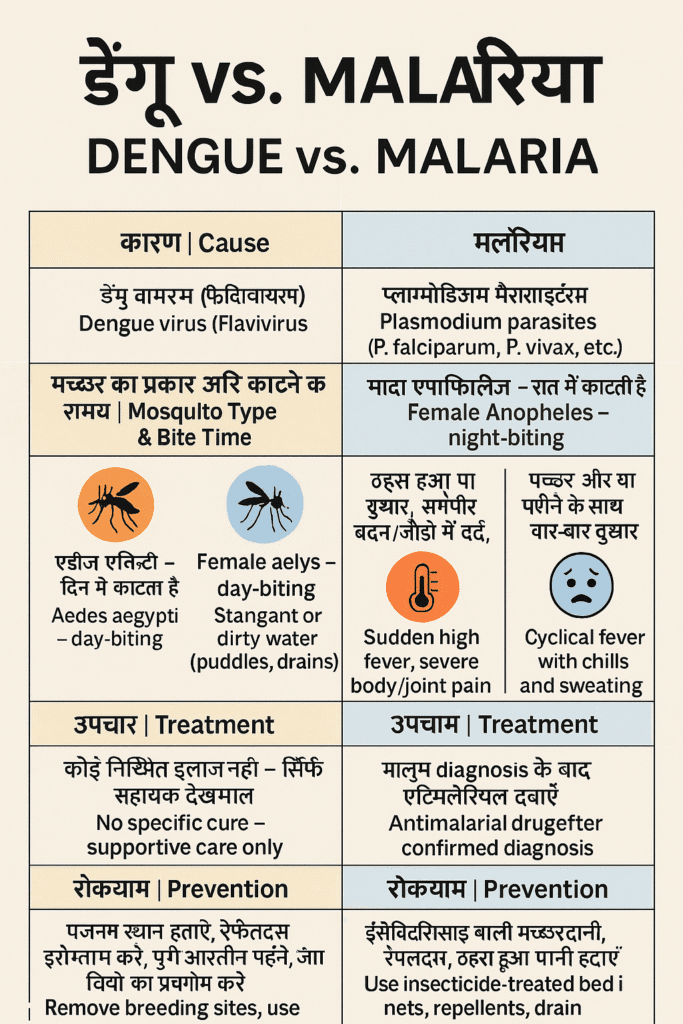
| Aspect | Dengue | Malaria |
|---|---|---|
| Cause | Dengue virus (Flavivirus) | Plasmodium parasites (P. falciparum, P. vivax, etc.) |
| Mosquito Type & Bite Time | Aedes aegypti — day‑biting | Female Anopheles — night‑biting |
| Breeding Sites | Clean stagnant water (coolers, pots, buckets) | Stagnant or dirty water (puddles, drains) |
| Main Symptoms | Sudden high fever, severe body/joint pain, rash | Cyclical fever with chills and sweating |
| Treatment | No specific cure — supportive care only | Antimalarial drugs after confirmed diagnosis |
| Prevention | Remove breeding sites, use repellents, wear long sleeves, use screens | Use insecticide‑treated bed nets, repellents, drain stagnant water |
3. Diagnosis
Dengue:
NS1 Antigen Test (first 5 days)
IgM/IgG Antibody Test
Malaria:
Rapid Diagnostic Test (RDT)
Thick and thin blood smear microscopy
4. Treatment Differences
Dengue:
No specific antiviral medicine
Adequate fluid intake
Paracetamol for fever and pain (avoid aspirin/ibuprofen)
Hospital monitoring in severe cases
Malaria:
Antimalarial medicines (Artemisinin‑based combination therapy, quinine)
Start medication promptly after confirmation
5. Prevention Measures
For Dengue:
Remove stagnant water around the house once a week
Use mosquito repellents with DEET or picaridin
Install window/door screens or use mosquito nets
For Malaria:
Sleep under insecticide‑treated mosquito nets
Indoor residual spraying in risk areas
Prevent stagnant water by ensuring proper drainage
6. When to See a Doctor
Dengue: Persistent vomiting, abdominal pain, bleeding from the mouth/nose, extreme weakness. Malaria: Prolonged fever cycle, yellowing of skin (jaundice), and breathing difficulty.
Conclusion
Dengue and malaria are both seasonal infectious diseases, but they differ in their causes, diagnosis, and treatment. Correct identification and timely medical care can prevent serious complications.
Sources
FAQs
1 What are the main reasons mosquitoes enter the house?
Mosquitoes often enter homes due to stagnant water, unhygienic surroundings, open windows, and doors without screens. Water collecting in buckets, flower pots, and on rooftops provides ideal breeding spots for them.
2 Do mosquito-repelling plants really work?
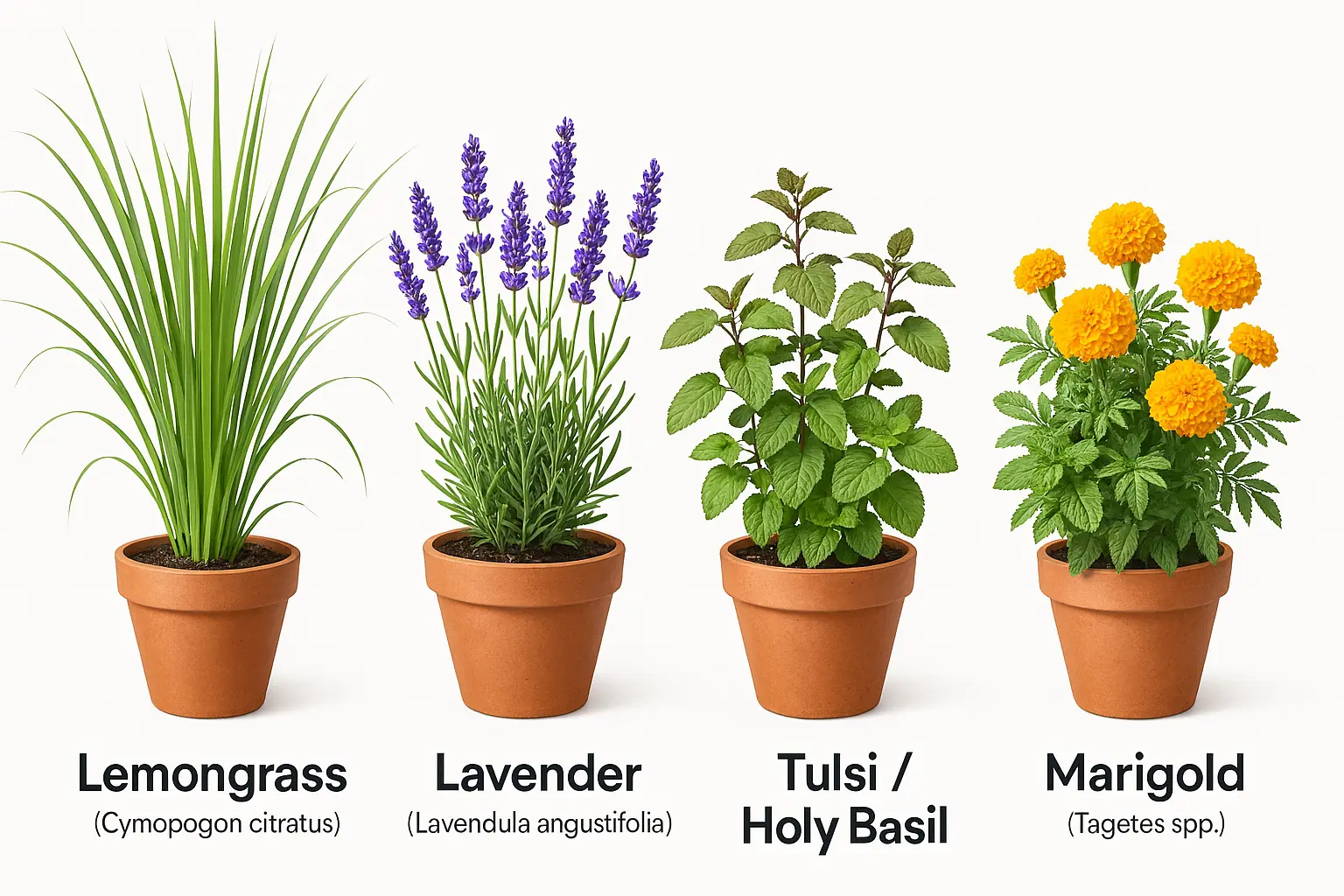
Yes — plants like Tulsi (Holy Basil), Lemongrass, and Mint act as natural mosquito repellents. Their strong aroma contains compounds such as citronellal, eugenol, and menthol, which help keep mosquitoes away while adding freshness to your home environment.
3. Why does the mosquito menace increase during the monsoon?
During the rainy season, water tends to collect in pits, flowerpots, and coolers. The warm and humid weather creates ideal conditions for mosquito eggs to hatch into larvae and grow rapidly.
4. What is the easiest home remedy to make your house mosquito‑free?
The simplest method is to remove stagnant water, spray neem or lemongrass oil, and install nets on windows and doors. These steps quickly reduce the number of mosquitoes in your home.
5. what is the Difference between Dengue and Malaria ?
Dengue is caused by the dengue virus and spread by Aedes aegypti mosquitoes that bite during the day and breed in clean stagnant water. Malaria is caused by Plasmodium parasites and spread by Anopheles mosquitoes that bite at night and breed in stagnant or dirty water. Dengue symptoms include high fever, severe body/joint pain, and rash, while malaria typically presents with cyclical fever, chills, and sweating. Dengue has no specific cure—treatment is supportive—whereas malaria is treated with prescribed antimalarial drugs after diagnosis.