









1. Introduction
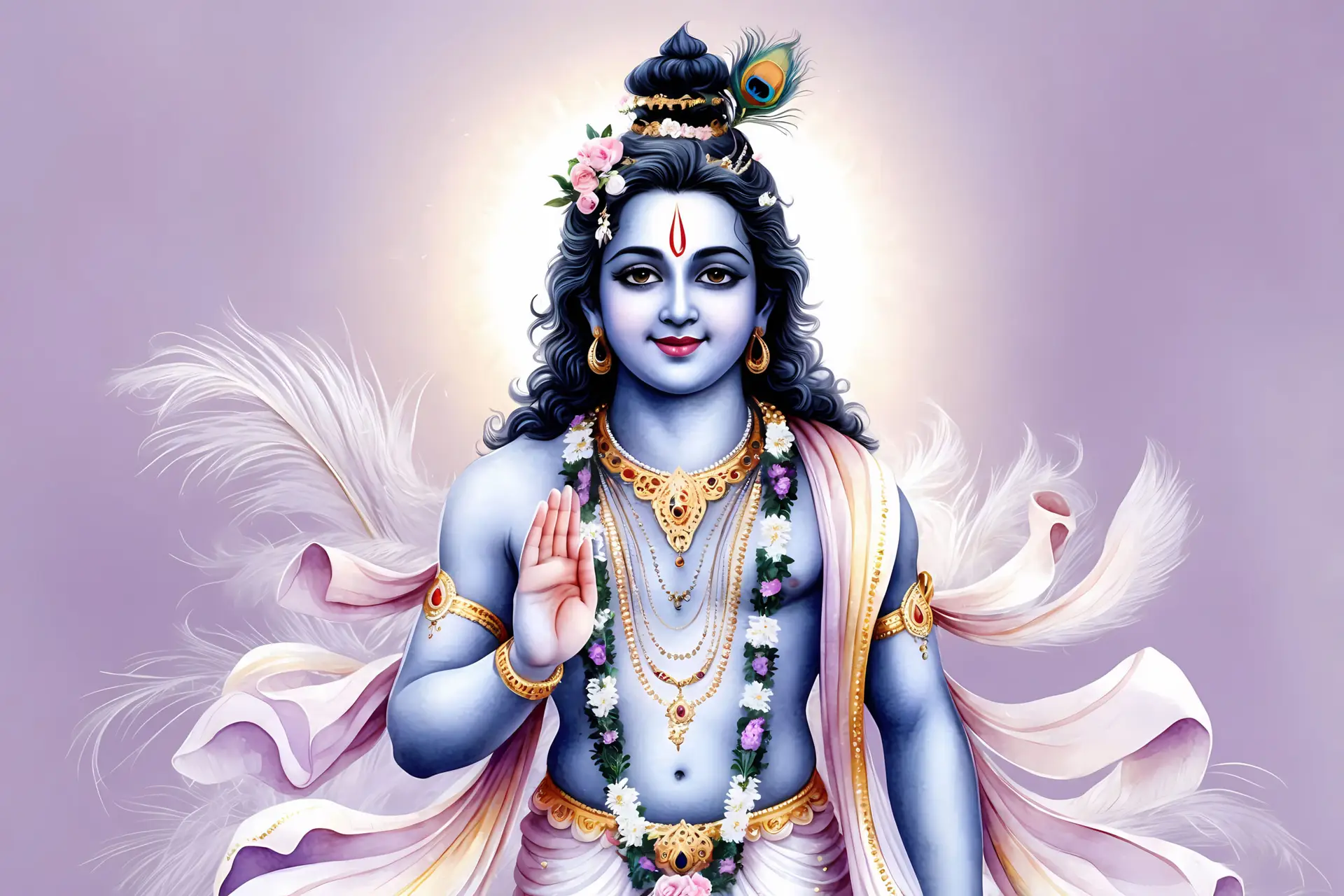
“Whenever there is a decline in righteousness and an increase in unrighteousness, I manifest myself.” – Bhagavad Gita, Chapter 4, Verse 7 Krishna Janmashtami, also known as Gokulashtami, is one of the most joyous and spiritually uplifting festivals in India. It marks the birth of Lord Krishna, the eighth incarnation of Lord Vishnu, who is revered as the protector of dharma and the destroyer of evil. Celebrated with devotion, fasting, and vibrant festivities, Janmashtami unites millions across the globe in prayer and joy. Beyond its religious value, the festival reminds us of the timeless values Krishna embodied—love, truth, justice, and compassion.
2. History and mythological significance
Krishna’s birth story
Mathura’s promise: Krishna was born to Devaki and Vasudeva in Mathura, where the tyrant Kansa feared a prophecy that Devaki’s child would end his rule.
A midnight miracle: On the night of Krishna’s birth, the prison doors opened and the Yamuna parted, allowing Vasudeva to carry the infant to safety in Gokul.
Gokul to glory: Raised by Yashoda and Nanda, Krishna’s playful childhood leelas gave way to his righteous mission—ultimately defeating Kansa and restoring dharma.
Why Janmashtami is celebrated
Triumph of good over evil: The festival honors the victory of truth and compassion over fear and oppression.
Living wisdom: Krishna’s teachings—duty with devotion, compassion for all beings, and inner steadiness—shape the spiritual heart of Janmashtami discourses.
Keywords to include: Krishna Janmashtami history; Krishna’s birth story; significance of Janmashtami.
3. How Krishna Janmashtami is celebrated
Temple celebrations:
Decorations with flowers, lights, rangoli, and jhankis (tableaux) depicting Krishna’s life.
Bhajans, kirtans, and a midnight arati with abhishekam (ritual bathing) of Krishna’s deity.
Major centers like Mathura and Vrindavan conduct ras-leela performances and offer chhappan bhog.
Home celebrations:
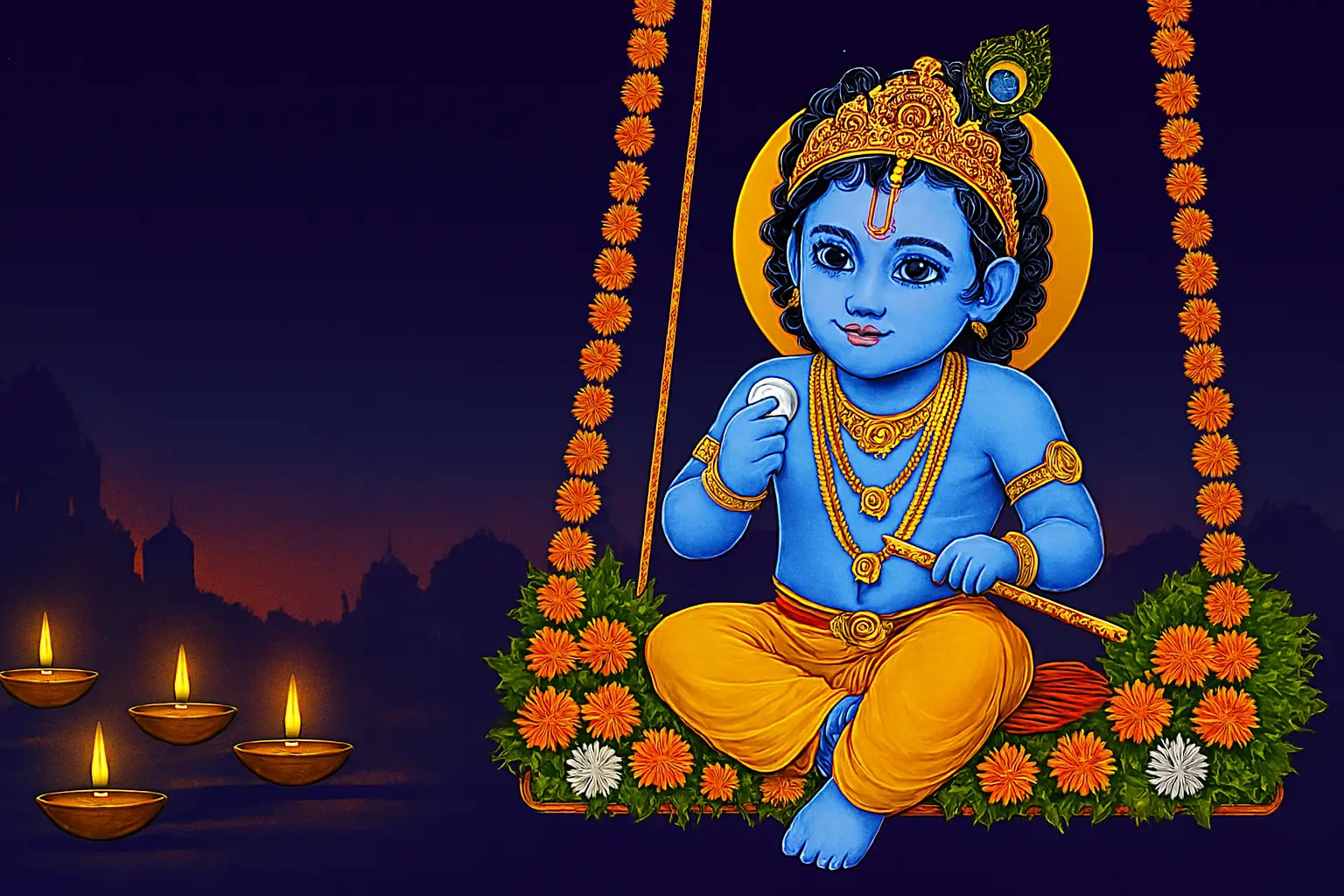
Fasting (phalahar or nirjala) until midnight, decorating a swing (jhula) for Bal Gopal, and offering makhan-mishri, fruits, and sweets.
Family kirtans and scripture reading, followed by midnight arati and prasad distribution.
Dahi Handi (Maharashtra and beyond):
Youth form human pyramids to break a curd-filled handi, symbolizing Krishna’s butter-loving playfulness.
Many cities organize community competitions with safety measures and cultural programs.
Regional variations:
North India: Jhankis, ras-leela, and midnight darshan.
South India: Offerings like aval/poha and seedai; devotional kolams and temple visits.
ISKCON worldwide: Grand midnight abhisheks, nonstop kirtan, dramas, Gita talks, and large-scale prasadam distribution across temples in India and the global diaspora.
4. Rituals and puja vidhi (step-by-step)
Sankalp (devotional intent):
Set your intention for a pure, peaceful celebration. Prepare a clean altar with Bal Gopal in a decorated cradle.
Fasting (vrat):
Choose a sattvik fast—fruits, milk, and vrat-friendly foods—or a stricter fast as per health and guidance.
Abhishekam:
Bathe the deity with panchamrit (milk, curd, ghee, honey, sugar) followed by clean water; adorn with fresh clothes, garlands, and tulsi leaves.
Offerings and arati:
Offer makhan-mishri, fruits, sweets, and simple sattvik dishes; perform midnight arati with conch and bells.
Kirtan and paath:
Chant the Hare Krishna maha-mantra, sing devotional bhajans (e.g., “Govind Bolo Hari Gopal Bolo”, “Achyutam Keshavam”), and read from the Bhagavad Gita or Srimad Bhagavatam.
Parana (breaking the fast):
Break the fast after the prescribed parana time—commonly after midnight rituals or as advised by your local panchang or temple.
5. Traditional foods and Krishna Janmashtami recipes
Makhan Mishri:
Fresh white butter mixed with rock sugar—simple, sattvik, and symbolic of Krishna’s favorite.
Panchamrit (charanamrit):
Combine milk, curd, ghee, honey, and sugar; add tulsi; offer first, then distribute as prasad.
Vrata-friendly mains:
Sabudana Khichdi: Soaked tapioca pearls stir-fried with peanuts, cumin, and mild spices.
Kuttu/Singhara Poori: Buckwheat or water chestnut flour puris with aloo sabzi (no onion/garlic).
Samvat rice kheer: Barnyard millet simmered in milk with cardamom.
Prasad sweets and snacks:
Panjiri, Peda, Shrikhand, Kalakand, Malpua: Choose simple recipes with minimal ingredients; keep sattvik.
Tip: Label dishes at community events for common allergens (nuts, dairy) and vrat suitability.
6. Dress and decoration ideas
For kids and adults:
Dress children as Krishna or Radha with a light dhoti/lehenga, flute, and peacock feather. Adults can opt for pastel, comfortable ethnic wear for late-night rituals.
Home décor themes:
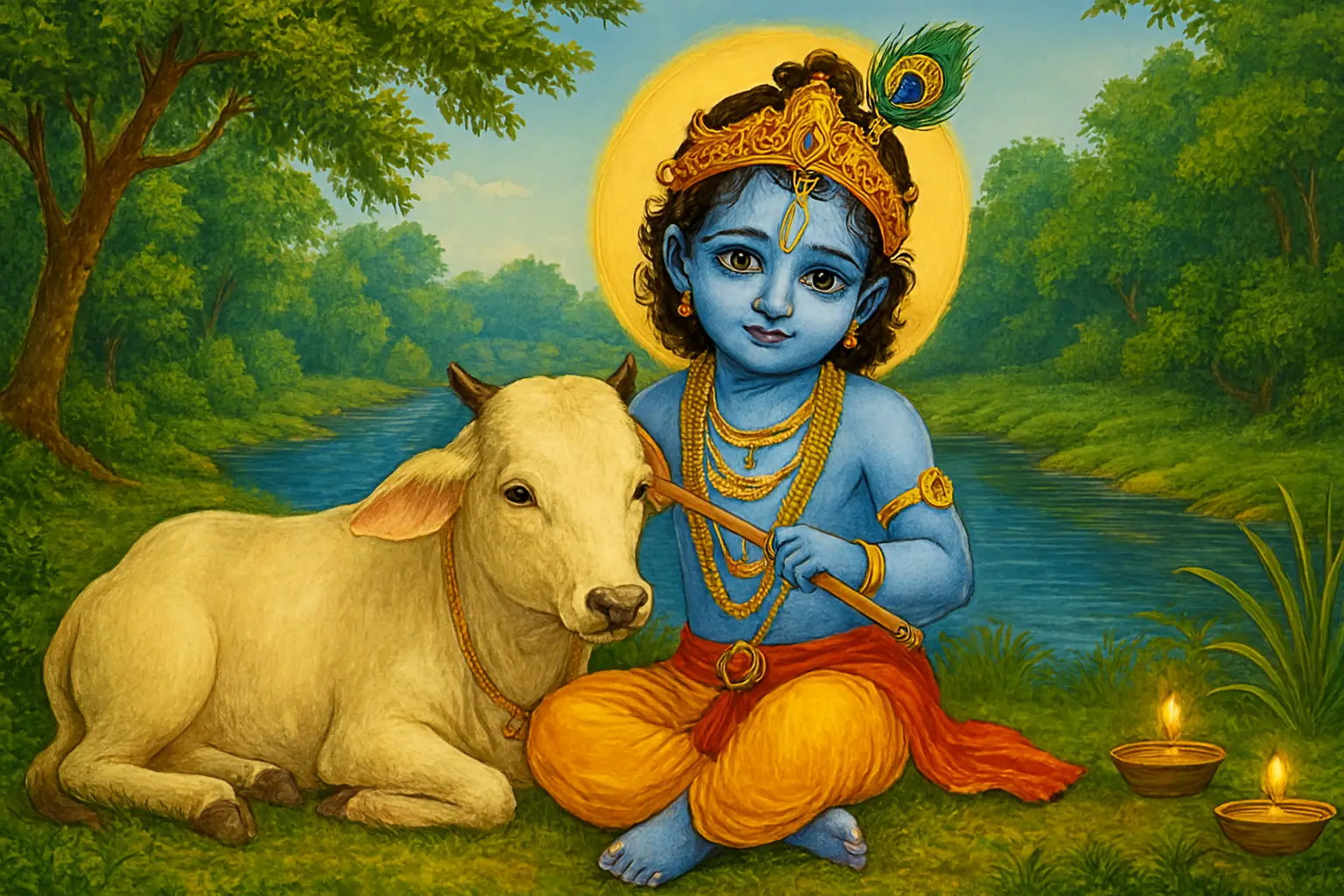
Jhanki ideas: Krishna’s birth in Mathura, Vrindavan scenes with cows and gopis, or Govardhan-lila.
Eco décor: Clay lamps, marigold garlands, banana leaves, and fabric buntings; avoid glitter plastics.
Jhula centerpiece:
A small swing with flowers, soft lighting, and peacock motifs becomes the visual heart of the altar.
7. Global celebrations (including ISKCON)
Indian diaspora communities in the USA, UK, Canada, Australia, Fiji, and Mauritius organize temple processions, cultural performances, and community feasts. ISKCON temples—such as ISKCON London, ISKCON New York, ISKCON Sydney, ISKCON Nairobi, and many across India—hold elaborate midnight abhisheks, extended kirtans, dramas based on Krishna’s life, and free or subsidized prasadam for visitors. Many centers livestream the celebrations and conduct Nandotsav the following day.
8. Quotes and teachings from Lord Krishna
Duty with devotion: Do your work sincerely, offering the results to the divine—free from anxiety about outcomes.
Compassion for all beings: See the same divine presence in everyone; let kindness guide your choices.
Steady mind: Cultivate equanimity through devotion and self-discipline; joy and sorrow are both teachers.
These timeless teachings are often the focus of Janmashtami talks at temples and ISKCON centers.
9. Eco-friendly and social impact ideas
Sustainable décor and idols: Choose clay idols, natural dyes for rangoli (turmeric, beetroot, indigo), and reusable fabrics.
Zero-waste prasad: Serve in steel or areca plates; compost temple flowers and organic waste; donate surplus food to shelters.
Safe, green Dahi Handi: Use clay pots, set crowd-safety measures, and ensure clean-up after events.
Community seva: Organize sapling drives, neighborhood clean-ups, and blood donation camps in Krishna’s name.
10. Conclusion
Janmashtami isn’t only a festival—it’s a living reminder that love, courage, and wisdom can transform our lives. Whether you celebrate at home, your neighborhood temple, or an ISKCON center, may the midnight kirtan fill your heart with peace. Share your Janmashtami memories and decorations in the comments to inspire others.
Sources for Gathering Information
Religious Texts: Bhagavad Gita, Bhagavata Purana (Canto 10).
Official Websites: ISKCON, Mathura Tourism.
Government Source: Ministry of Culture, India.
News Portals: The Hindu, Times of India – Janmashtami.
Books: Krishna: The Supreme Personality of Godhead – A.C. Bhaktivedanta Swami Prabhupada, Myths and Legends of India – William Radice.


